Bold Minimalism: How Designers Are Balancing Simplicity with Impact
27th December 2025
Tailwind CSS Best Practices for Large Applications
21st January 2026
Repetition – You Don’t Attract What You Want But You Create What You Repeatedly Act On
A truth that shows up in code, work, and life
Late nights don’t change people.
Pressure doesn’t either.
What actually changes us is repetition.
The quiet, uncelebrated choices we make every day — especially when no one is watching — slowly shape who we become and what we experience.
This isn’t philosophy.
It’s how the human brain works.
The Brain Is a Pattern-Building Machine
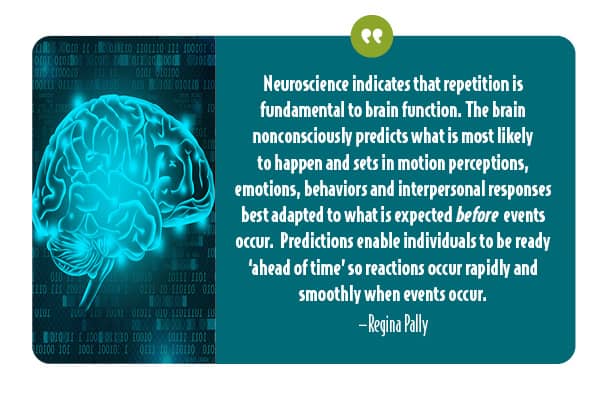
Neuroscience tells us that the brain doesn’t transform through intention — it transforms through repeated behavior.
Every time you repeat an action, thought, or response:
- certain neural pathways strengthen
- others weaken
- the brain adapts to make that pattern easier next time
This process is called neuroplasticity.
In simple terms: What you practice becomes what feels natural.
That’s true whether you’re learning a new skill, managing stress, or responding to failure.
Life runs on the same principle systems do:
frequent execution beats good ideas.
Why Wanting Something Rarely Works
Most people want:
- clarity
- growth
- confidence
- stability
- better outcomes
But wanting operates in the imagination.
Reality responds to behavior.
Psychology shows that identity follows action, not the other way around.
We don’t act confident because we are confident — we become confident because we repeatedly act despite discomfort.
That’s why change feels slow at first.
You’re training a new pattern.
And the brain resists unfamiliar ones.
A Scene That Happens Everywhere
One person avoids difficult conversations.
Another leans into them — awkwardly at first.
One postpones learning.
Another starts before feeling ready.
One waits for motivation.
Another builds momentum through action.
Months later, their lives look very different.
From the outside, it appears like “talent” or “luck.”
From the inside, it was simply what they kept repeating.
Stress, Habits, and the Feedback Loop
Under stress, the brain defaults to familiar patterns.
That’s why:
- some people shut down
- some overthink
- some get reactive
- some stay composed
Not because they’re stronger — but because those responses have been rehearsed before.
Research in behavioral science shows:
We don’t rise to the level of our goals.
We fall to the level of our systems.
In work.
In relationships.
In personal growth.
Creation Is Boring (And That’s the Point!)
Real creation doesn’t feel magical.
It feels repetitive.
It looks like:
- showing up when progress feels invisible
- choosing the harder response again
- refining instead of quitting
- learning instead of blaming
Over time, these actions compound.
Just like small optimizations compound into powerful systems.
The Human Parallel to Debugging
When something breaks, you don’t blame the output.
You look at:
- inputs
- logic
- repetition
Life works the same way.
If the same outcomes keep appearing, the pattern hasn’t changed yet.
And patterns don’t change through wishing —
they change through consistent, intentional action.
A Grounded Way to Think About Manifestation
Manifestation isn’t about attracting outcomes.
It’s about aligning behavior with the result you want until the system has no choice but to respond.
You don’t become something by thinking about it.
You become it by living it often enough.
Final Thought
Your life isn’t shaped by what you hope for.
It’s shaped by what you rehearse.
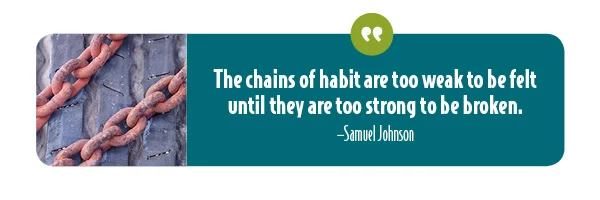
The mind learns from repetition.
The brain adapts to action.
And reality reflects consistency.
You don’t attract what you want.
You create what you repeatedly act on.
Quietly.
Logically.
Inevitably.