

Flask vs FastAPI: Which Python Framework Should You Choose in 2026?
28 March 2026
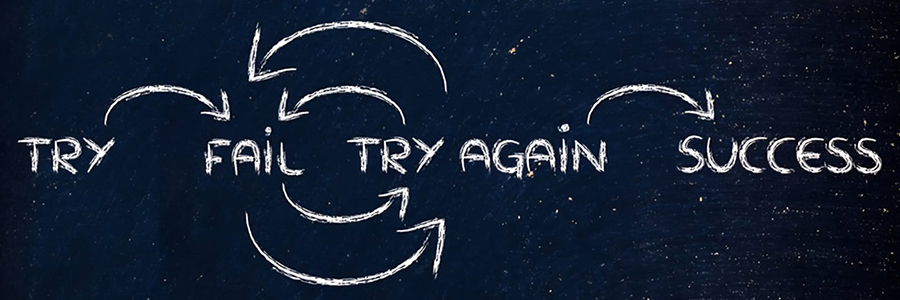
Failure is Not the End: It’s the Beginning of Growth
20 April 2026
How to Improve Your Logic Building Skills
A practical, step-by-step guide for beginners who want to think like a programmer — before touching a single line of code.
Most beginners think programming is about syntax — memorizing keywords, brackets, and commands. But the real skill is logic : the ability to break a problem down into small, clear steps a computer can follow. The good news? Logic is not a talent you’re born with. It’s a muscle you build.

STEP 01 — FOUNDATION
Understand the problem before solving it
Before writing any code — or even pseudocode — read the problem slowly. Ask yourself: What exactly is being asked? What are the inputs? What should the output look like? Most beginners skip this and jump straight to typing. That’s where the confusion starts.
A simple technique: rewrite the problem in your own words. If you can explain it out loud in plain sentences, you understand it. If you can’t, re-read it.
TRY THIS
Take any problem — “Find the largest number in a list” — and write 3 English sentences describing how you’d do it by hand, without code.
STEP 02 — THINKING
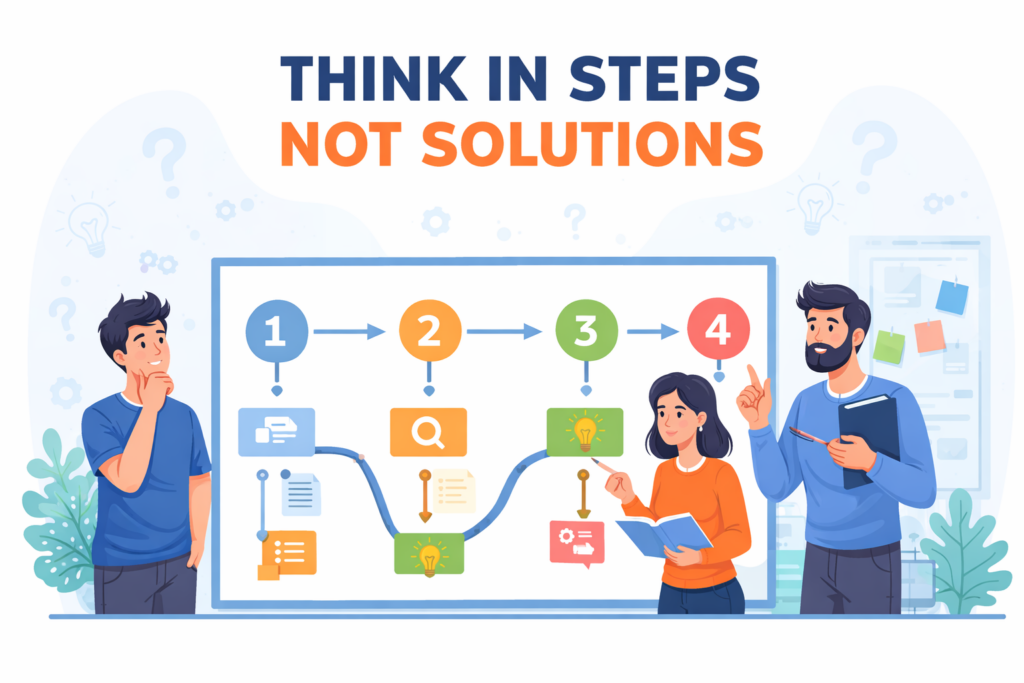
Think in steps, not solutions
Logic is sequential. Computers follow instructions one at a time, in order. So train yourself to think in numbered steps. This is called writing pseudocode — an informal, plain-language outline of your solution before writing actual code.
- Write steps in plain English first
- Identify decisions: “if this, then that”
- Identify repetitions: “do this until…”
- Only then, translate to code
EXAMPLE
To reverse a string: (1) Start with the last character. (2) Write it down. (3) Move to the previous character. (4) Repeat until the first character. This IS the algorithm — code is just the translation.
STEP 03 — CORE SKILLS
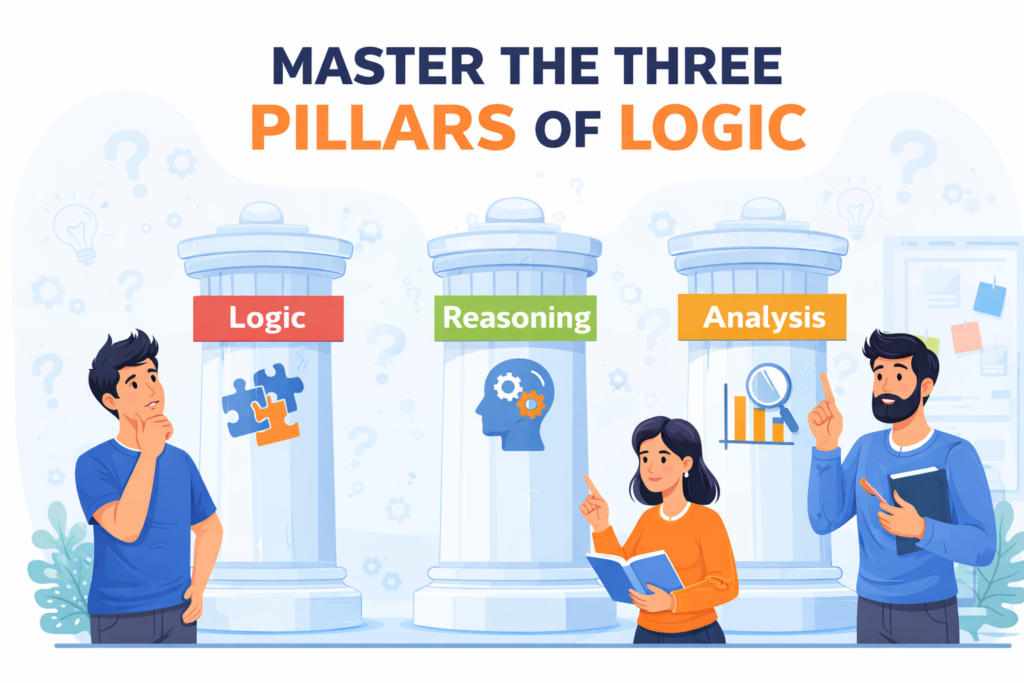
Master the three pillars of logic
Almost every problem in programming is built from three fundamental building blocks. Learn to spot them everywhere:
- Sequence — instructions that run top to bottom, in order
- Selection — decisions based on conditions (if / else)
- Iteration — repeating steps in a loop (for / while)
EXERCISE
Pick any everyday task — making tea, booking a cab, logging into an app — and identify the sequence, decisions, and repetitions in it. You’re already doing logic!
“Logic is not about being smart. It’s about being patient enough to break
things down into tiny, obvious steps.”
STEP 04 — PRACTICE
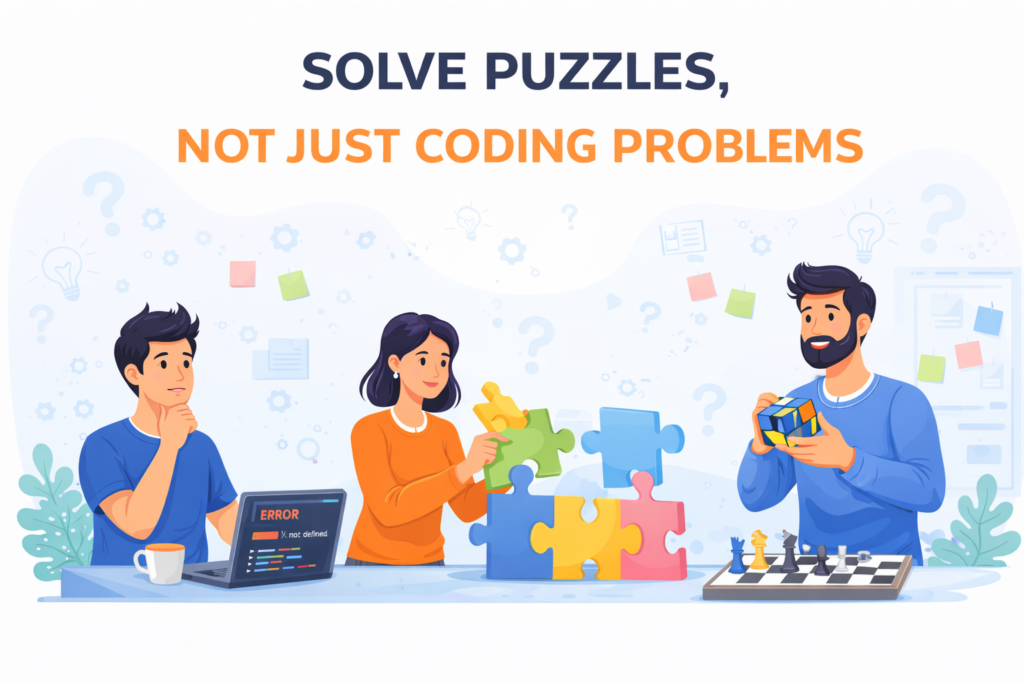
Solve puzzles, not just coding problems
Your brain builds logical patterns through repetition. The fastest way to improve isn’t grinding LeetCode — it’s training your pattern-recognition through puzzles and games that force structured thinking.
Try these:
- Chess / Sudoku — Forces you to think many steps ahead and spot patterns
- HackerRank Easy — Beginner-friendly coding challenges with instant feedback
- Flowchart Drawing — Visualize logic before writing code, pen and paper works
- Project Euler — Math-based logic puzzles that scale in difficulty
STEP 05 —MINDSET
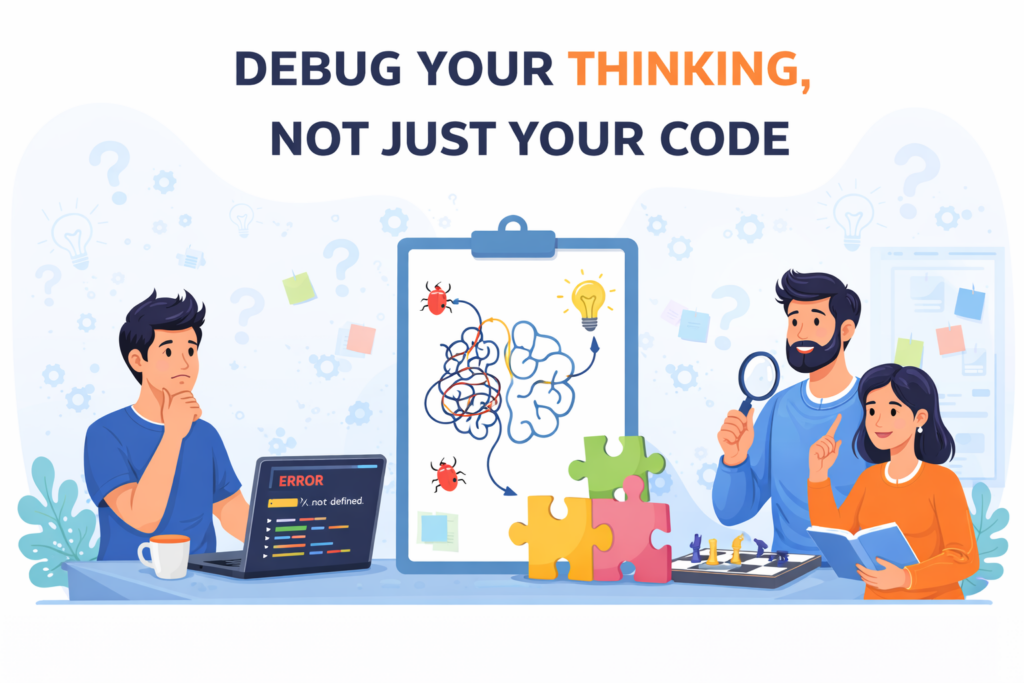
Debug your thinking, not just your code
When your logic breaks, resist the urge to randomly change things. Instead, trace through your own steps manually. Take a small example input, follow your logic step by step on paper, and find exactly where the result goes wrong. This is called dry running — and it’s one of the highest-leverage skills a beginner can develop.
Also: get comfortable being wrong. Every error is showing you where your mental model is off. That’s not failure — that’s the learning happening in real time.
DAILY HABIT
Spend 15 minutes a day solving one small logic problem — even a brain teaser or a riddle. Consistency beats intensity. After 30 days, notice the difference in how you approach new problems.
” Logic building is a slow skill, but a compounding one. Every problem you work through — even if you get it wrong — rewires the way you think. The programmers who get good fast aren’t the ones who memorize the most syntax. They’re the ones who learned to love the process of
breaking things down. Start there, and everything else follows. “