Disney Logo Evolution: From 1923 to Today’s Iconic Castle
20th September 2025
Emotional Independence: Loving Without Losing Yourself
23rd September 2025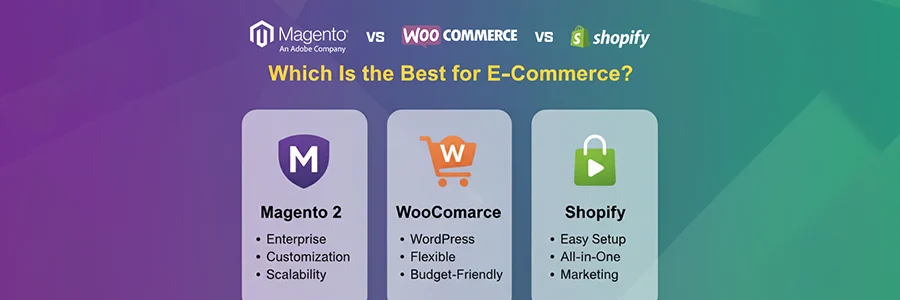
When it comes to launching an online store, the biggest question every business faces is: which platform should I choose? With so many options out there, three names dominate the e-commerce space — Magento 2, WooCommerce (WordPress), and Shopify. Each of these platforms has its strengths, limitations, and ideal use cases. Let’s break it down so you can decide which one is best for your business
Magento 2: Power and Scalability
Magento 2 is a heavyweight in the e-commerce world. It’s built for serious businesses with large catalogs and complex requirements.
Pros
- Designed for large product catalogs and high traffic.
- Advanced features like multi-store, B2B support, custom pricing, and flexible workflows.
- Highly customizable with endless possibilities for developers.
Cons
- Steep learning curve — requires technical skills or a dedicated developer.
- Hosting, extensions, and maintenance can get expensive.
- Needs regular performance tuning and security updates.
Best for enterprise-level businesses or those planning long-term growth with big budgets.
WooCommerce: Flexibility With WordPress
WooCommerce turns WordPress into a fully functional e-commerce store. If you already love WordPress, this might feel like a natural fit.
Pros
- Free plugin with huge ecosystem of themes and extensions.
- Seamless content + commerce integration (great for blogging and SEO).
- Full control over hosting, customization, and scalability
Cons
- More plugins = higher risk of conflicts and performance issues.
- You’re responsible for hosting, backups, and security.
- Scaling requires strong hosting and optimization.
Best for small to medium businesses that want content marketing + e-commerce together, and don’t mind handling some technical work.
Shopify: Simplicity and Speed
Shopify is the go-to platform for those who want to launch quickly without worrying about technical complexities.
Pros
- Easy setup with drag-and-drop builder.
- Hosting, security, and updates included.
- Handles scaling well on higher plans.
- Large app marketplace for added features.
Cons
- Monthly subscription and transaction fees.
- Limited deep customization — you’re bound by Shopify’s rules.
- Costs add up with apps and premium themes.
Best for startups and small businesses who want to sell online fast without managing servers or coding.
Quick Comparison
| Feature | Magento 2 | WooCommerce | Shopify |
| Ease of Use | Complex | Moderate | Very Easy |
| Cost | High (dev + hosting) | Medium (plugins + hosting) | Subscription (predictable) |
| Scalability | Excellent | Good (with effort) | Good (higher plans) |
| Customization | Unlimited | High | Limited |
| SEO/Content | Strong | Excellent | Good |
| Maintenance | High | Medium | Low |
So, Which One Should You Choose?
- Choose Magento 2 if you run or plan to run a large-scale store with complex features, and you have the budget for developers and infrastructure.
- Choose WooCommerce if you’re a WordPress user and want to combine content marketing with e-commerce for a medium-sized business.
- Choose Shopify if you’re a beginner or small business owner who values ease of use, speed, and less technical headaches.
Final Thoughts
There’s no “one best platform” — it all depends on your business size, goals, and resources. Shopify is great for quick launches, WooCommerce shines when you need flexibility and content power, and Magento 2 is the king of scalability for enterprises.
The right choice is the one that fits your current needs while supporting your future growth.
similar blog Click
For more information Contact XpertLab