
Future-Proofing Your Career: The Skills You Need to Stay Relevant
23 June 2025
𝐌𝐚𝐬𝐭𝐞𝐫 𝐓𝐡𝐞 𝐁𝐨𝐫𝐢𝐧𝐠 𝐖𝐨𝐫𝐤
26 June 2025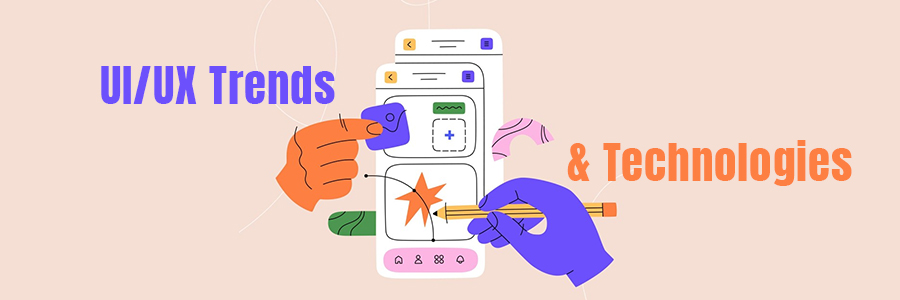
UI/UX Trends & Technologies Shaping 2025
Unlocking the Future of Digital Experience
In today’s fast-paced digital world, user interface (UI) and user experience (UX) are not just design elements—they’re core business strategies. As technology evolves, so does how users interact with websites, apps, and platforms. In 2025, emerging technologies, user behaviors, and industry demands are shaping the next generation of intuitive, inclusive, and immersive experiences.
Below is a deep dive into the latest UI/UX trends and technologies you need to watch out for in 2025.
🌐 1. AI-Powered Personalization
What’s New?
AI is no longer just a back-end assistant. In 2025, hyper-personalization using AI and machine learning is becoming the default. Interfaces learn from user behavior to deliver tailored layouts, product suggestions, color themes, and even navigation paths.
Applications:
- Real-time dynamic content on dashboards
- Adaptive onboarding flows
- Predictive search experiences
- Personalized themes based on usage behavior
Tools to Explore:
- Adobe Sensei
- Framer AI
- Uizard
- Rewind AI (for behavior analysis)
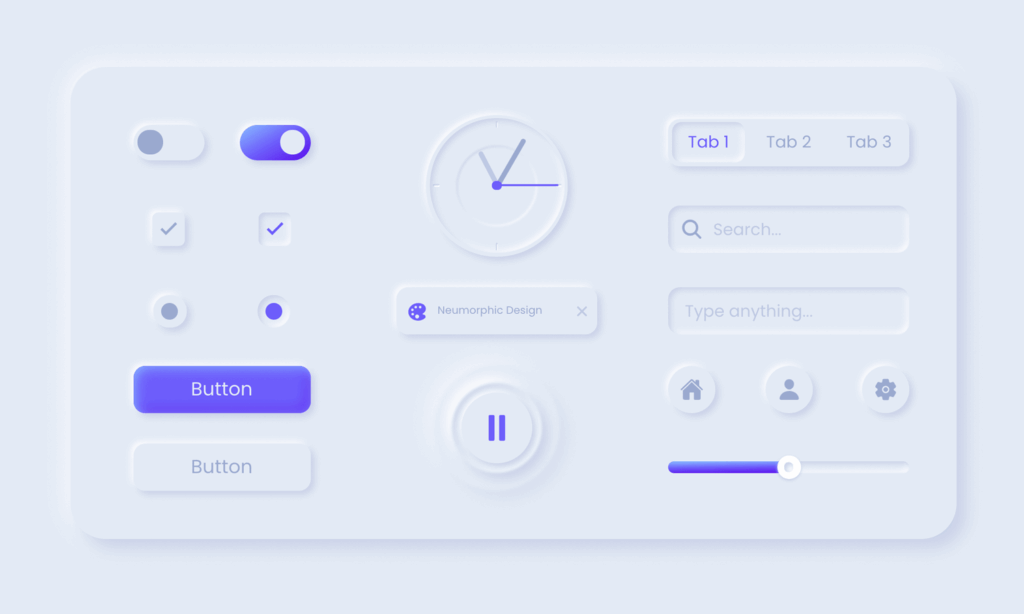
🎨 2. Neumorphism 2.0: Soft UI Meets Accessibility
What’s New?
Neumorphism (soft shadows and minimal depth) has matured into an accessible, light-weight UI style. Designers now blend it with high-contrast elements, bold typography, and motion to ensure accessibility for all users.
Key Features:
- Subtle 3D effects without harming readability
- Smooth transitions and shadows
- Scalable for mobile and wearable devices
Why It Matters:
It delivers a clean, tactile interface that balances elegance with usability.
🤖 3. Voice-Driven Interfaces (VUI)
What’s New?
With smart assistants integrated into everything from phones to cars, Voice UX is on the rise. The challenge is designing a conversation-first UI that feels natural.
UX Considerations:
- Designing error-proof voice commands
- Creating fallback visual interfaces
- Multilingual support
- Integrating tone and sentiment detection
Technologies to Watch:
- Amazon Alexa SDK
- Google Dialogflow
- Microsoft Azure Bot Service
🧠 4. Emotion-Driven UX (Affective Computing)
What’s New?
AI can now detect micro-expressions, eye movement, voice tone, and behavior patterns to identify user emotion. UX designers use this to trigger real-time UI adjustments.
Examples:
- Calmer interface modes for stressed users
- Motivational nudges in productivity tools
- Changing UI colors to suit the mood
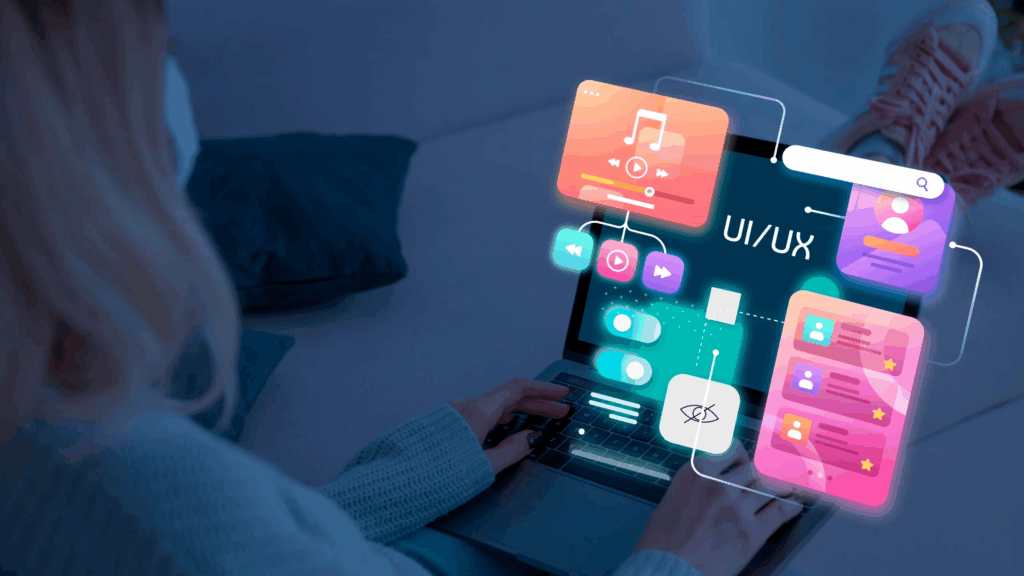
🖼️ 5. Augmented Reality Interfaces (AR UI/UX)
What’s New?
As AR glasses and smartphones evolve, the need for AR-specific UI/UX grows. Think of designing not for a screen, but for the real-world space users interact with.
Key UI Principles:
- Contextual UI that adapts to surroundings
- Gesture-based interaction
- Anchoring elements to physical landmarks
Tools:
- Apple’s ARKit
- Google ARCore
- Unity for AR UI/UX prototyping
🧩 Bonus: Other Noteworthy Mentions
- Glassmorphism UI (semi-transparent frosted-glass design)
- Skeuomorphism 2.0 (real-world inspired interfaces)
- Dynamic Typography (responsive, interactive text)
- Scroll-Triggered Animations for Storytelling
- 3D Web Interfaces using Three.js
💡 Final Thoughts
To thrive in this evolving landscape, businesses and designers must:
- Stay updated with tools and tech
- Test rigorously and inclusively
- Prioritize ethical, emotional, and immersive design
Let’s not just design for screens. Let’s design for people.
- For More Info: XpertLab
- Related Blog: React Native Glassmorphism