

Building a Circular Volume Slider
22 October 2026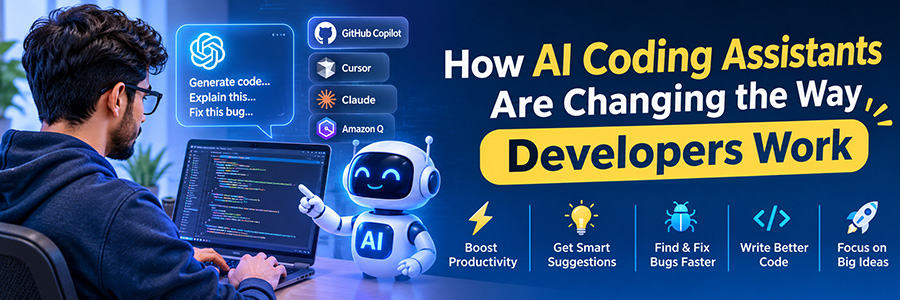
How AI Coding Assistants Are Changing the Way Developers Work
Not long ago, writing software meant a developer, a blank editor, and a browser full of documentation tabs. Today, many developers work with an AI partner that suggests code as they type, explains unfamiliar errors, and drafts entire functions from a one-line description. Tools like GitHub Copilot, Cursor, and Claude Code have moved from novelty to everyday equipment in a remarkably short time.
What’s Getting Better
The most obvious change is speed on routine work. Boilerplate, repetitive formatting, simple tests, and standard patterns that once took an hour can now take minutes. Developers spend less time on the tedious parts and more on the design decisions that matter.
AI assistants also act as patient tutors. A newcomer can paste in confusing code and ask what it does, or ask why an error appeared and how to fix it. This lowers the barrier to entry, and it helps experienced developers too, especially when they’re working in a language or codebase they don’t know well.
There’s also a shift in what the job feels like. Instead of typing every line, developers increasingly describe what they want, review what the AI produces, and steer it. The role leans more toward editor and architect, and less toward typist.
What’s Worth Worrying About
The first risk is that AI-generated code can look right and still be wrong. Assistants sometimes produce bugs, invent functions that don’t exist, or introduce security flaws, and they do so with complete confidence. Code that nobody carefully reviews is a liability, no matter how quickly it was written.
The second is skill erosion. If a beginner always accepts the AI’s answer, they may never build the deep understanding that comes from struggling through a problem. Seniors can spot a bad suggestion because they’ve seen many. Juniors who skip that learning may find it harder to catch mistakes later, and that raises real questions about how the next generation of engineers will develop.
Then there are the practical concerns: privacy when proprietary code is sent to an external service, unresolved debates about the licensing of the code these models learned from, and the risk of teams becoming dependent on tools they don’t fully control.
The Productivity Puzzle
Claims about productivity are mixed. Some studies and developer reports show big gains on well-defined tasks, while others suggest the benefit shrinks on complex, real-world projects, where reviewing and fixing AI output eats into the time saved. The honest answer is that the gains are real but uneven, and they depend heavily on how the tool is used.
What This Means Going Forward
AI assistants aren’t replacing developers, but they are changing which skills matter most. Clear thinking, good judgment, careful review, and the ability to describe a problem precisely are becoming more valuable than memorizing syntax.
The developers who benefit most will likely be those who treat AI as a fast but fallible collaborator: useful for a first draft, never a substitute for understanding. Used that way, these tools can make software development faster, more accessible, and more creative. Used blindly, they can quietly make it more fragile.
The technology will keep improving. The challenge for developers, and for the companies hiring them, is to keep their own skills sharp while it does.